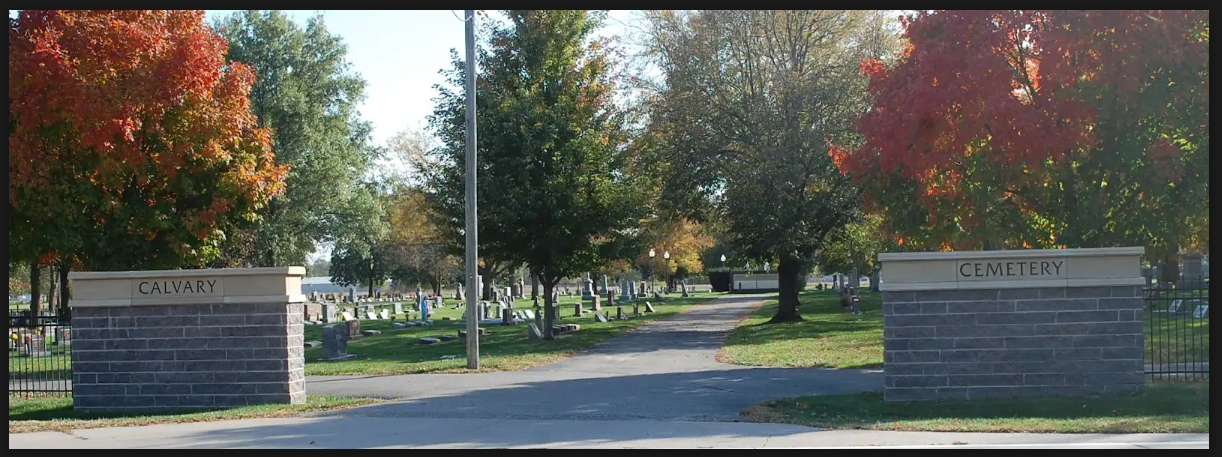
Calvary Cemetery
Calvary Catholic Cemetery
"The care with which we bury the dead expresses our faith in the victory over
everlasting death, which our Lord Jesus Christ has won in our human nature by his own death and resurrection. We bury the dead in the sure hope of the resurrection of the body, when their mortal bodies will share fully in the glory of the Risen Christ." - Catholic Cemetery Conference Christian Burial Guidelines; Catholic Cemeteries, Archdiocese of Omaha
Events
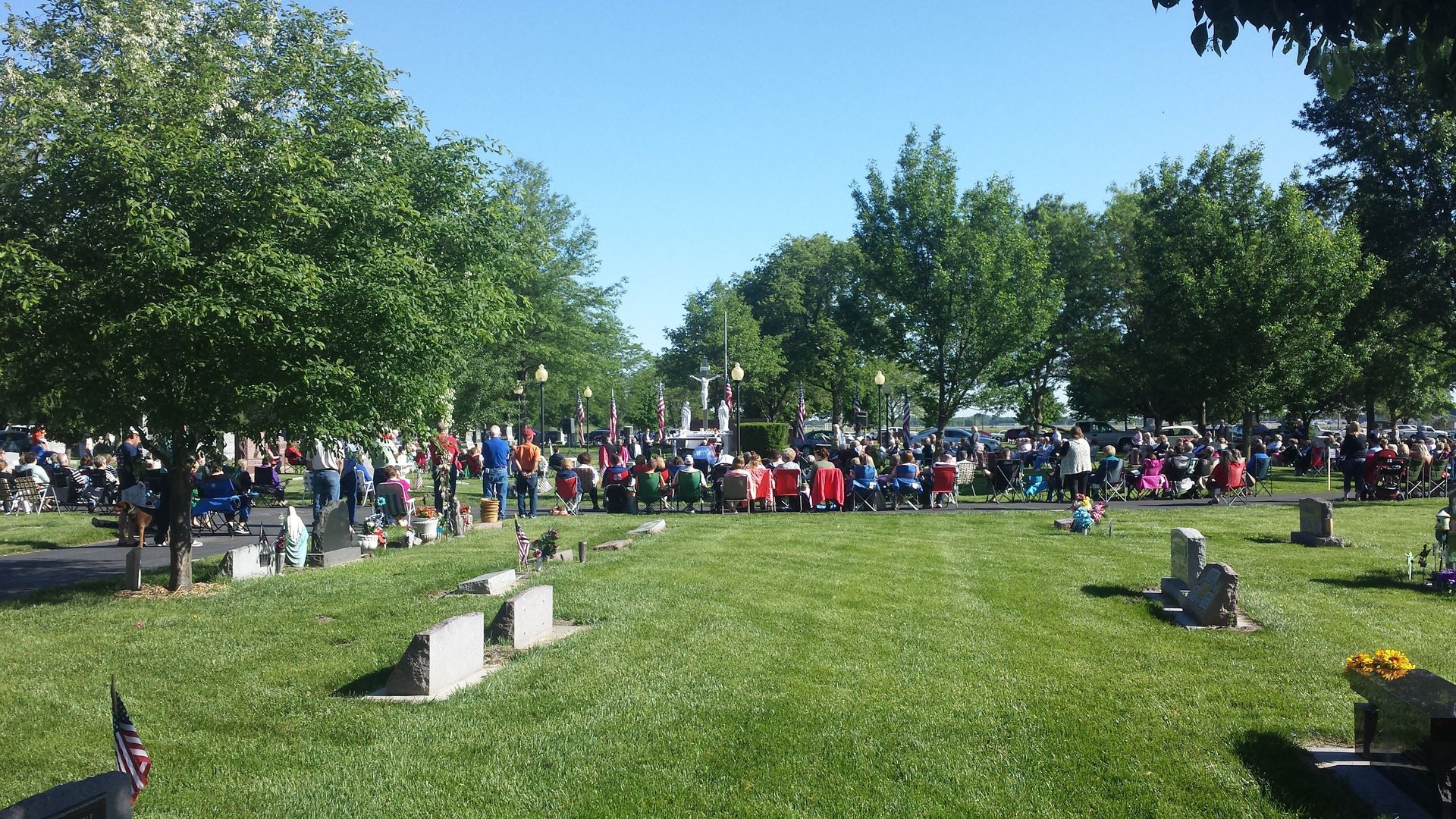
Memorial Day Mass
9:00 am @calvary
cemetery
Calvary FAQ
Q: What is the size of a plot/grave?
A: An individual gravesite is typically 4'x10'
Q: Are there discounts for parishioners?
A: Yes, parishioners of the parish family group (St. Patrick, St. Charles, St. Lawrence, St. Leo, and St. Rose) are all eligible for a reduced rate. Please check with the finance director at St. Patrick for pricing information at 402-721-6611 (email at the bottom of this page).
Q: How many interments are allowed in one grave?
A: Two interments are allowed in one grave if one is a cremation.
Q: Is there a deed?
A: There is no land transfer, so there is not a deed. You get a certificate for "Right of Burial".
Q: Are there requirements/regulations for cremation urns?
A: If an urn is made from a fragile material (glass, ceramic, etc.), they need to be in a vault sturdy enough to withstand dis-interment.
Q: How large can headstones be?
A: For a single 4' grave, the headstone can be 3'6" wide.
Q: Can there be more than one marker on a grave?
A: There can only be one upright marker per grave. A second marker is allowed, but it must be flush and understood that turf equipment will drive over it.
Q: What are my options if I possess un-needed gravesites?
A: The cemetery will always buy sites back for what was paid for them, or you may give them to a family member.
Contact Us
Cemetery/Plot Questions?
Contact sexton, Mick Jacobs, at 402-719-7322
FINANCIAL QUESTIONS? CONTACT STACIE AT THE PARISH OFFICE: 402-721-6611 X206
Need information on Christian burial or our local funeral homes?
History of Calvary Cemetery
Saint Patrick Parish
in Fremont was established in April of 1856 as a mission of Columbus, NE. Father John Lonergan was the first resident pastor of this parish, with a church being built on lower Main Street.
In the 1860s, as Fremont grew from a frontier settlement into a thriving agricultural community, Catholic families sought a dedicated burial place consistent with their faith. St. Patrick Parish, newly established, recognized this need.
In
1871, the parish purchased land west of Fremont — land that would become
Calvary Cemetery, the first consecrated Catholic burial ground in the area. Its location, adjacent to what would later become Ridge Cemetery, placed it at the heart of Fremont’s developing civic landscape. The original layout included 141 “Blocks” with a total of 4,008 individual graves.
Located on the western edge of Fremont, Nebraska, Calvary stands as one of the region’s most historically significant Catholic burial grounds. For more than 150 years, it has served as a place of remembrance, heritage, and community identity for generations of Catholic families.
The cemetery reflects the story of Fremont itself — a story shaped by immigration, faith, hardship, and perseverance. Irish and German settlers, arriving in the mid‑19th century, brought with them a deep Catholic tradition and a desire for a consecrated burial ground. Their efforts led to the establishment of St. Patrick Catholic Parish and, soon after, Calvary Cemetery.
Around the time Calvary was established, the City of Fremont itself was experiencing a ‘boom’ which caused the city’s original cemetery, “Green Grove,” to run out of room. So, in the late 1870’s a mass dis-interment was undertaken to move those buried there to Ridge Cemetery. Although there was no specific effort to distinguish the Catholic interments, it is believed that individual families did have their ancestors re-located to the Catholic consecrated cemetery.
The earliest recorded burial at Calvary Cemetery is
Mrs. Richard Williams, whose interment marks the beginning of the cemetery’s role as the final resting place for Fremont’s earliest Catholic settlers.
These pioneers — many of them Irish and German immigrants — helped build the foundations of Fremont’s civic, agricultural, and parish life. Their names appear throughout early parish registers, land deeds, and community records.
Prominent early families include:
- Dolan — early parish benefactors and landowners
- Hannon — active in parish leadership and local farming
- Bolton — among the earliest Catholic settlers in the region
- Shanahan — multi‑generation family with deep parish ties
- Kennedy — involved in Fremont’s early civic development
- O’Neill — strong presence in parish and community affairs
- McMahon — early agricultural contributors
- Duffy — long‑standing Catholic family with pioneer roots
- O’Connor — active in parish and community life
- Reilly — among the earliest burials and parish supporters
These families shaped the identity of St. Patrick Parish and the broader Fremont community.
As Fremont expanded, so did the Catholic community. Calvary Cemetery grew steadily, reflecting the increasing number of parishioners and the evolving funerary traditions of the time.
Key developments during this era:
- Expansion of burial sections
- Introduction of family plots
- Use of carved stone crosses
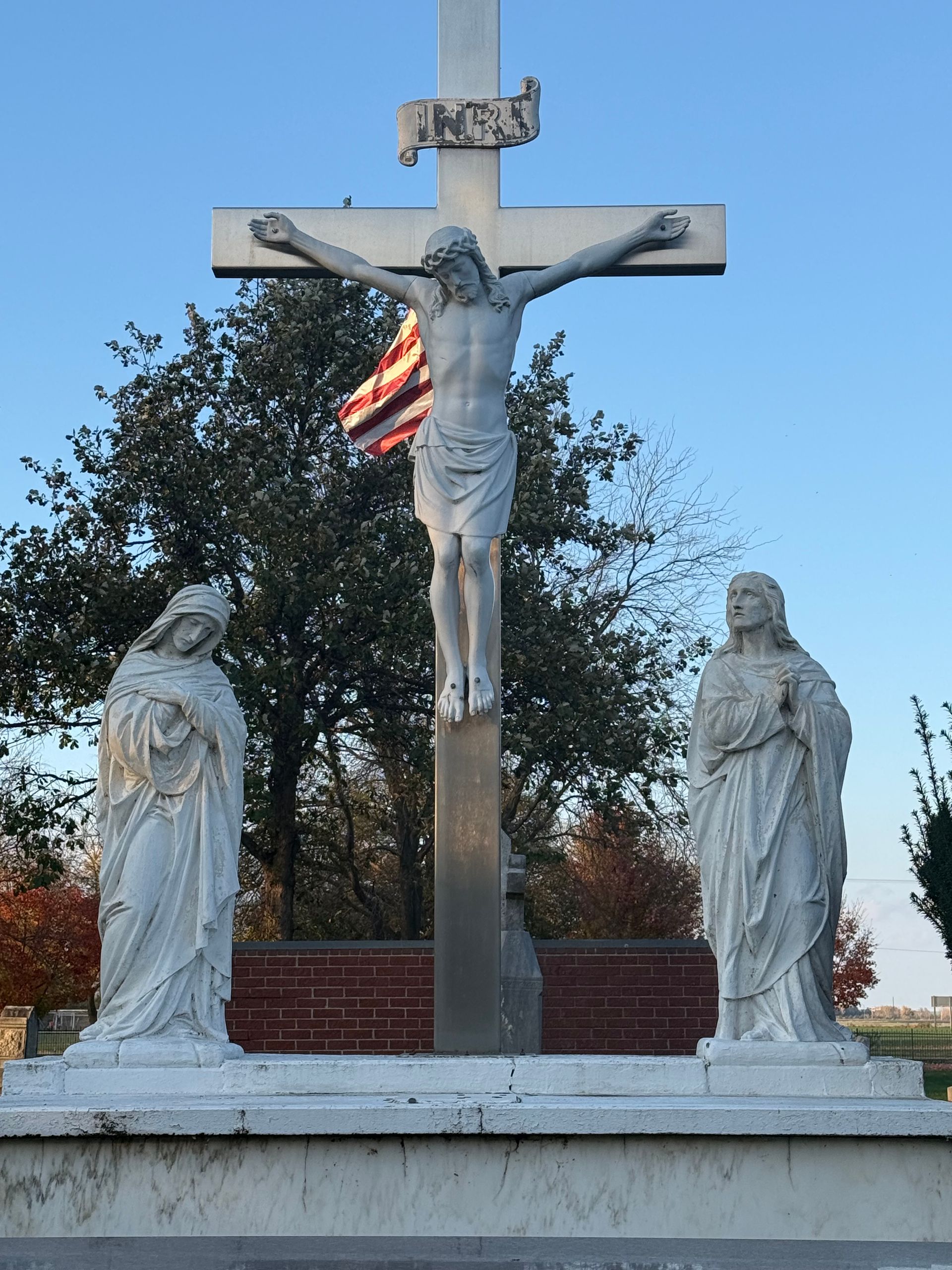
- Adoption of angelic and Marian statuary
- Increased record‑keeping by St. Patrick Parish
By the early 1900s, Calvary Cemetery had become the primary burial site for Catholic families in Fremont and surrounding rural areas. Parish records from this period show a growing, multi‑generational Catholic population.
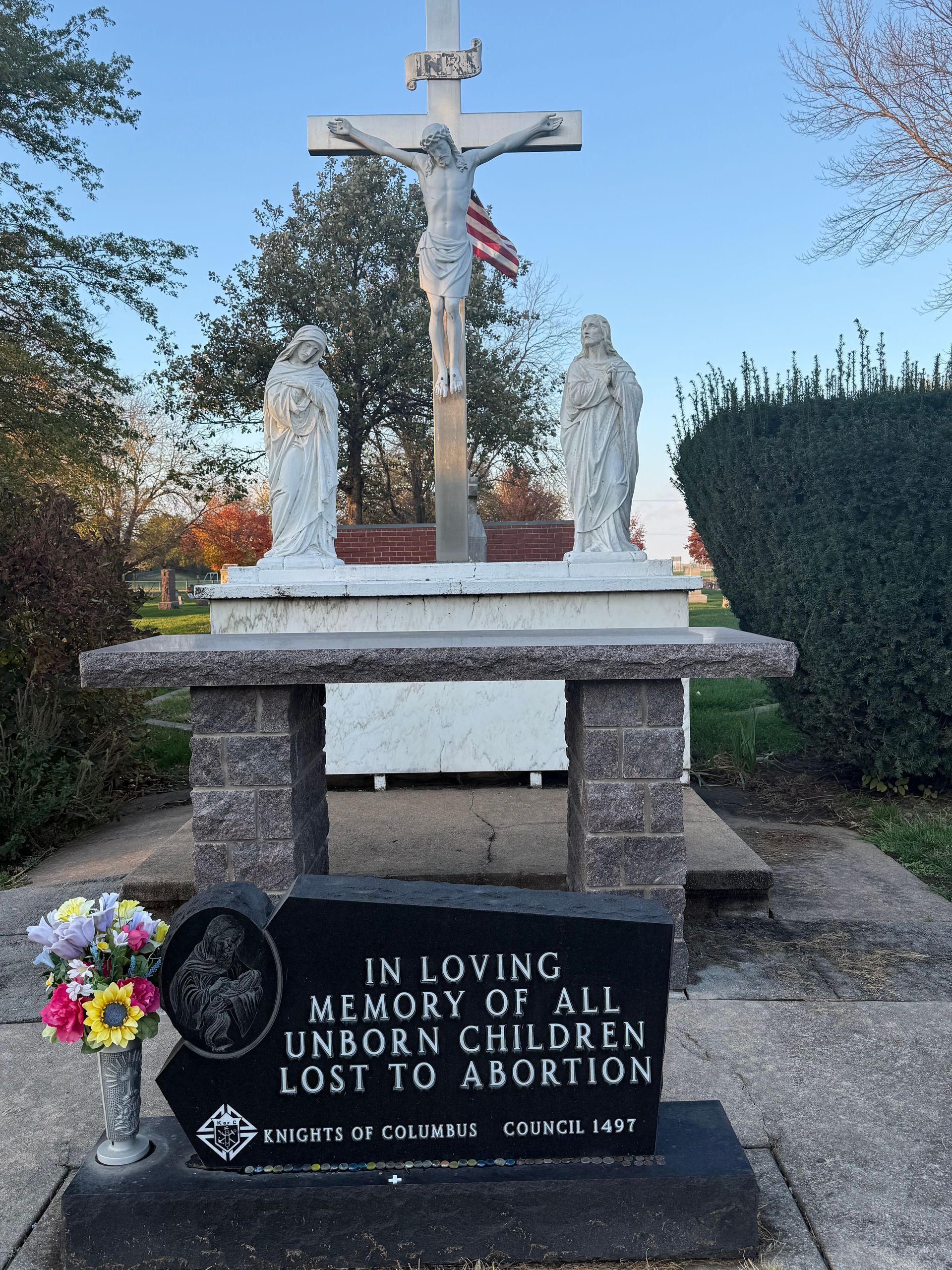
The care of Calvary Cemetery grounds was inconsistent at best, as graves were typically dug by the parish janitor or the families, and the upkeep was done by volunteers as well. Then in the 1960’s, members of Council 1497 of the Knights of Columbus was asked to take on the duty of maintaining the Cemetery Property.
The first Cemetery Board was formed in 1972. Joe Cajka, William Gannon, David Little, Gerald Mahlberg, Edward Moser and Gerald Uher made up that initial board, whose role was to advise the parish priest in all things cemetery.
In June 1975, genealogist Clarabelle Mares completed a full transcription of headstones at Calvary Cemetery. Her work preserved vital historical information that might otherwise have been lost to weathering or stone deterioration.
Her transcription documented:
- Names
- Birth and death dates
- Epitaphs
- Family relationships
- Plot groupings
This remains one of the most valuable genealogical resources for Dodge County researchers and descendants of Fremont’s early Catholic families.
In 1977, Gerald and Mary Mahlberg began the task of organizing all of the parish cemetery records. This involved assembling 100 years of written records, some in German, located in multiple registers. They spent untold hours researching records, chasing down incomplete information, albeit from mortuaries, newspapers, or family histories, and they constructed a filing system which was later moved onto a computer.
Improvements to the Cemetery include the construction of an altar, a Veterans Memorial, an underground sprinkler system, a maintenance building, and surfaced roadways.
An additional 9-acres were purchased as the need became apparent.
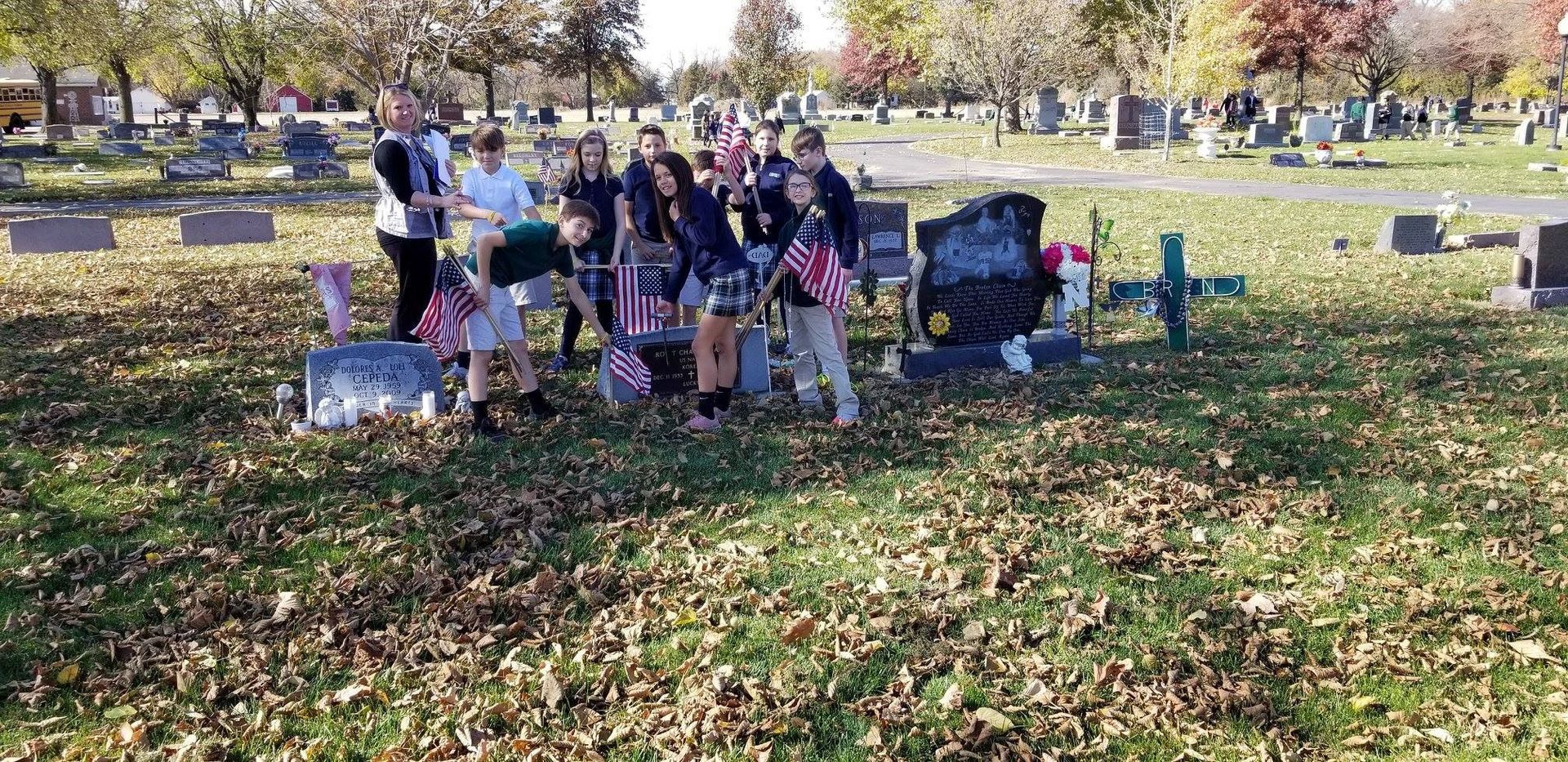
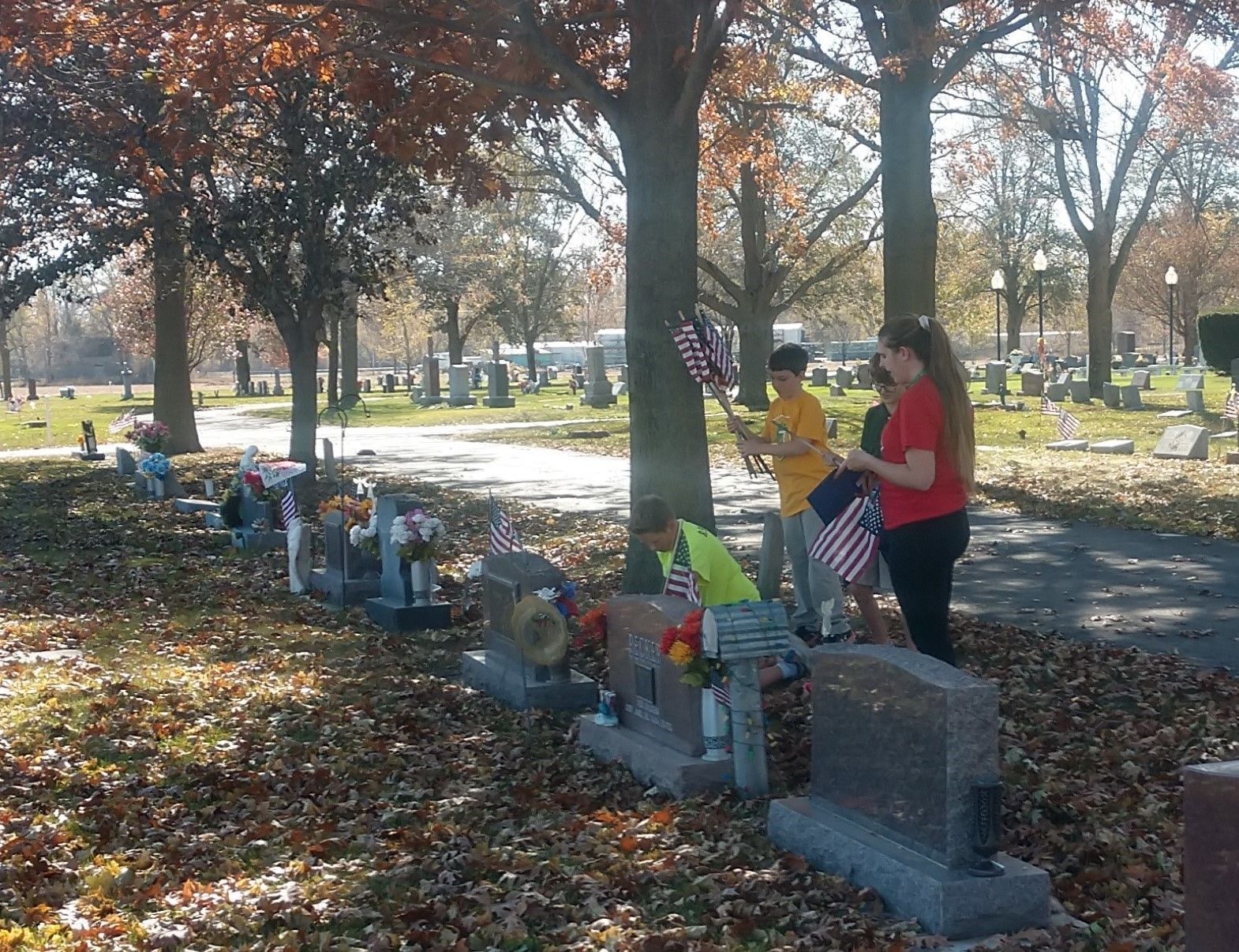
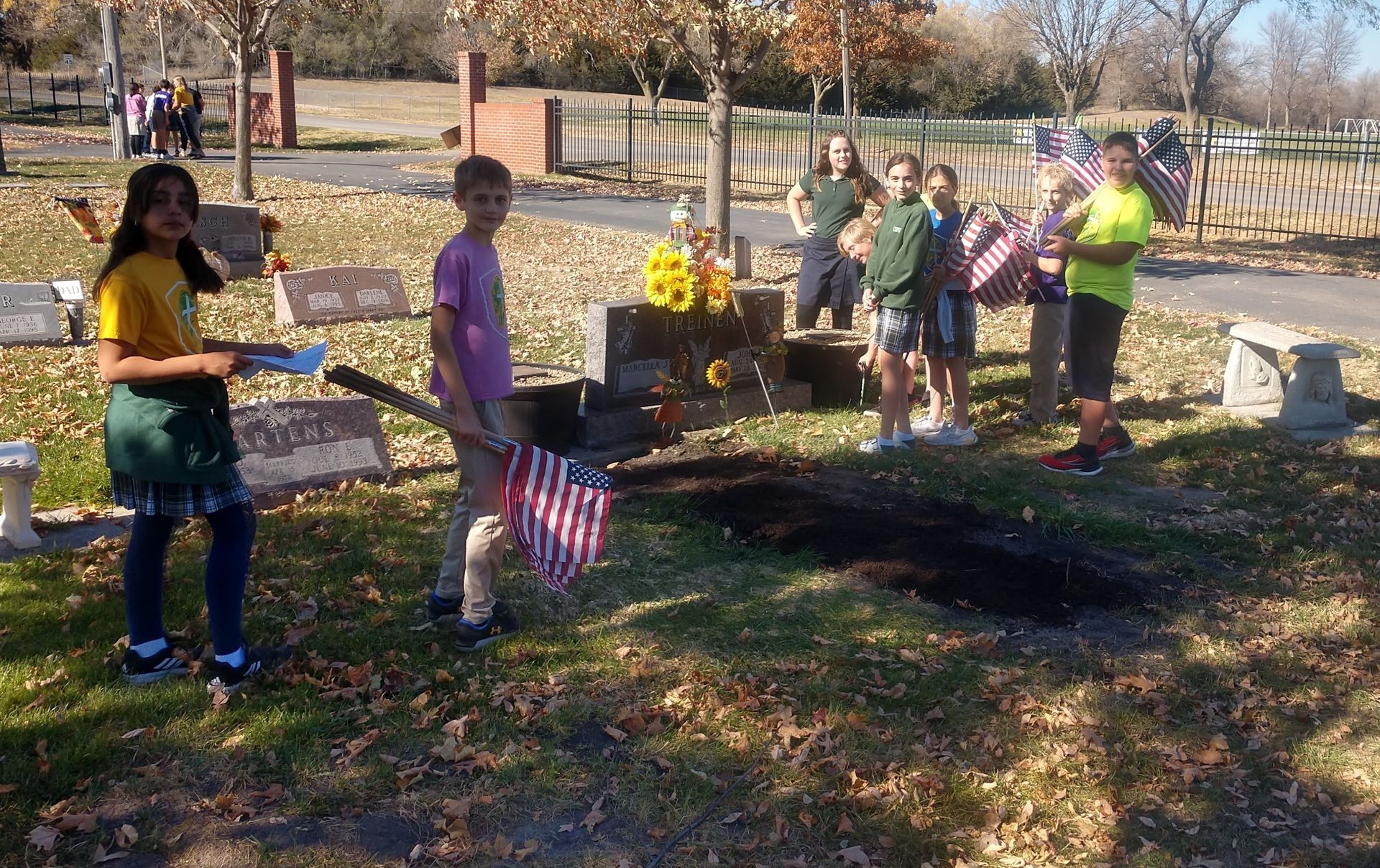
Calvary Cemetery honors veterans from nearly every major American conflict. Their graves — marked by military stones, bronze plaques, or family monuments — reflect the deep patriotic service of Fremont’s Catholic community.
Conflicts represented include:
- Civil War
- Spanish–American War
- World War I
- World War II
- Korean War
- Vietnam War
- Desert Storm
Many of these veterans were lifelong parishioners of St. Patrick Catholic Church, and their service is remembered during parish memorial events and local observances.
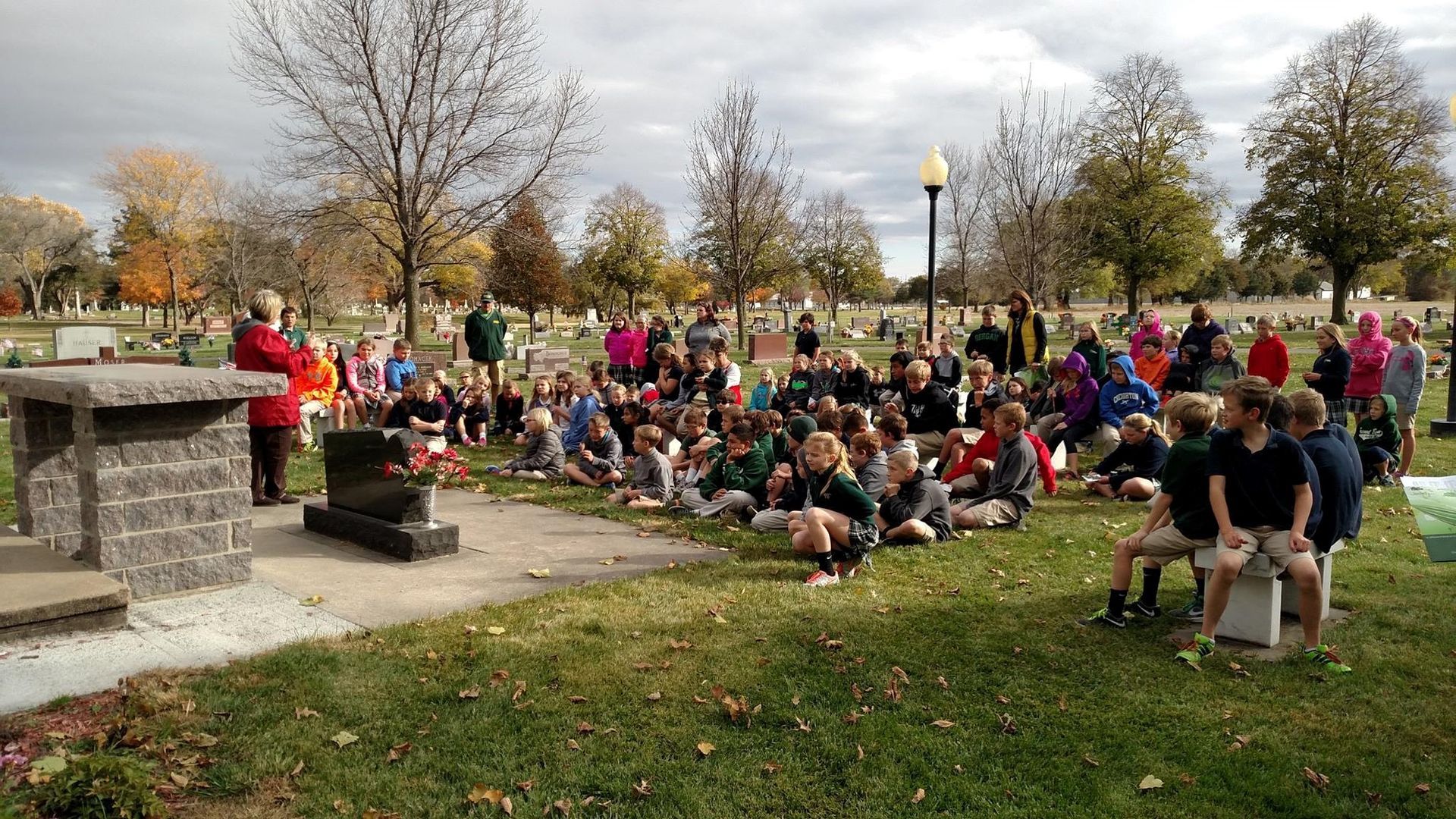
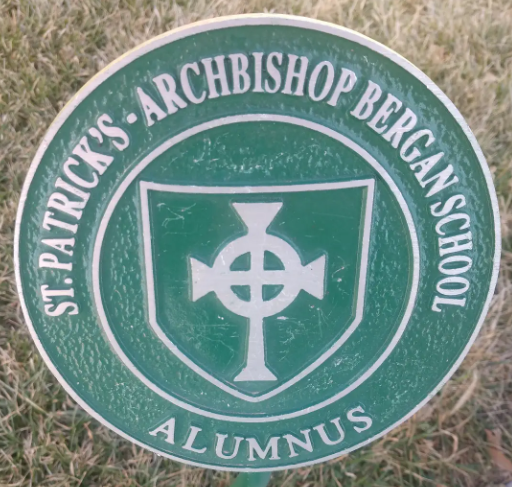
Calvary Cemetery also honors the alumni of both St Patrick and Archbishop Bergan High Schools with specially designed medallions with their graduating year each Memorial Day.
Calvary Cemetery is also the resting place of several priests, nuns, and parish leaders who shaped the spiritual and educational life of St. Patrick’s Catholic Church.
These individuals contributed to:
- Catholic education
- Parish administration
- Community outreach
- Sacramental life
- Growth of the parish school
Their presence in Calvary Cemetery reflects the deep connection between the parish and the cemetery’s history.
Calvary Cemetery follows a traditional Catholic layout, reflecting both the era of its founding and the evolving needs of the parish community. The grounds are divided into distinct sections, each representing a different period of Fremont’s Catholic history.
Primary sections include:
East Section (1870s–1920s)
- The oldest portion of the cemetery, containing pioneer burials, early parish families, and some of the most weathered headstones.
Central Section (1930s–1960s)
- Characterized by family plots, mid‑century markers, and more uniform stone styles.
West Section (1970s–2000s)
- Contemporary headstones and active burial plots.
South Section (2000s–Present)
- The most modern area, more structured lines and new style headstones.
Veterans’ Areas
- Scattered throughout the cemetery, with clusters of military markers in older rows.
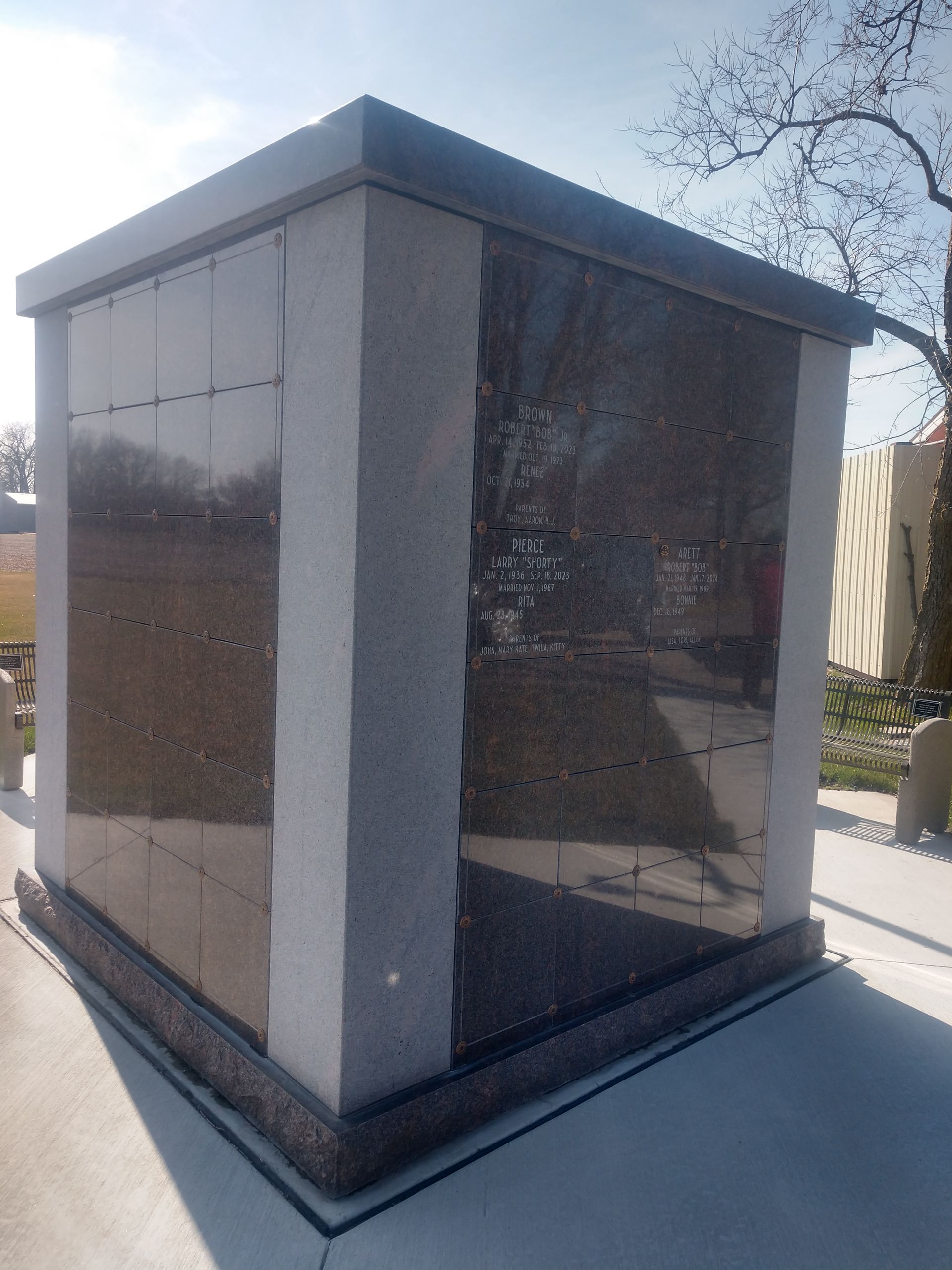
Columbarium (2020s–Present)
- An above ground structure to allow for the interment of cremains.
Catholic iconography — crosses, angels, rosaries, Marian symbols — appears throughout the grounds, reinforcing the sacred nature of the space.
Calvary Cemetery is one of the most valuable genealogical resources in Dodge County. Its records, combined with parish archives and the 1975 transcription, provide a detailed picture of Fremont’s Catholic families across generations.
Researchers use Calvary Cemetery to trace:
- Immigration patterns
- Family lineage
- Marriage connections
- Parish involvement
- Multi‑generation burial traditions
The cemetery’s continuity — from the 1870s to the present — makes it a rare and rich source of historical insight.
Today, Calvary Cemetery contains
more than 3,000 burials and remains an active, well‑maintained cemetery under the care of
St. Patrick Catholic Church.
Modern features include:
- Updated burial records
- Improved grounds maintenance
- Continued availability of plots
- Integration with parish memorial traditions
- Seasonal decoration and remembrance practices
Despite Fremont’s growth and modernization, Calvary Cemetery retains its quiet, reflective character — a place where history, faith, and community intersect.
Calvary Cemetery is more than a burial ground — it is a living archive of Fremont’s Catholic heritage. Its history mirrors the story of the parish, the city, and the families who built and sustained both for more than 150 years.
From pioneer settlers to modern parishioners, the cemetery stands as a testament to:
- Faith
- Community
- Service
- Family
- Continuity across generations
Its preservation ensures that the stories of Fremont’s Catholic families will endure for generations to come.